
Corridor execution
Highway and Expressway Plantation
Avenue, median, embankment and interchange planting for expressway and highway packages — designed for survival at handover, not just for the drawing.
Service detail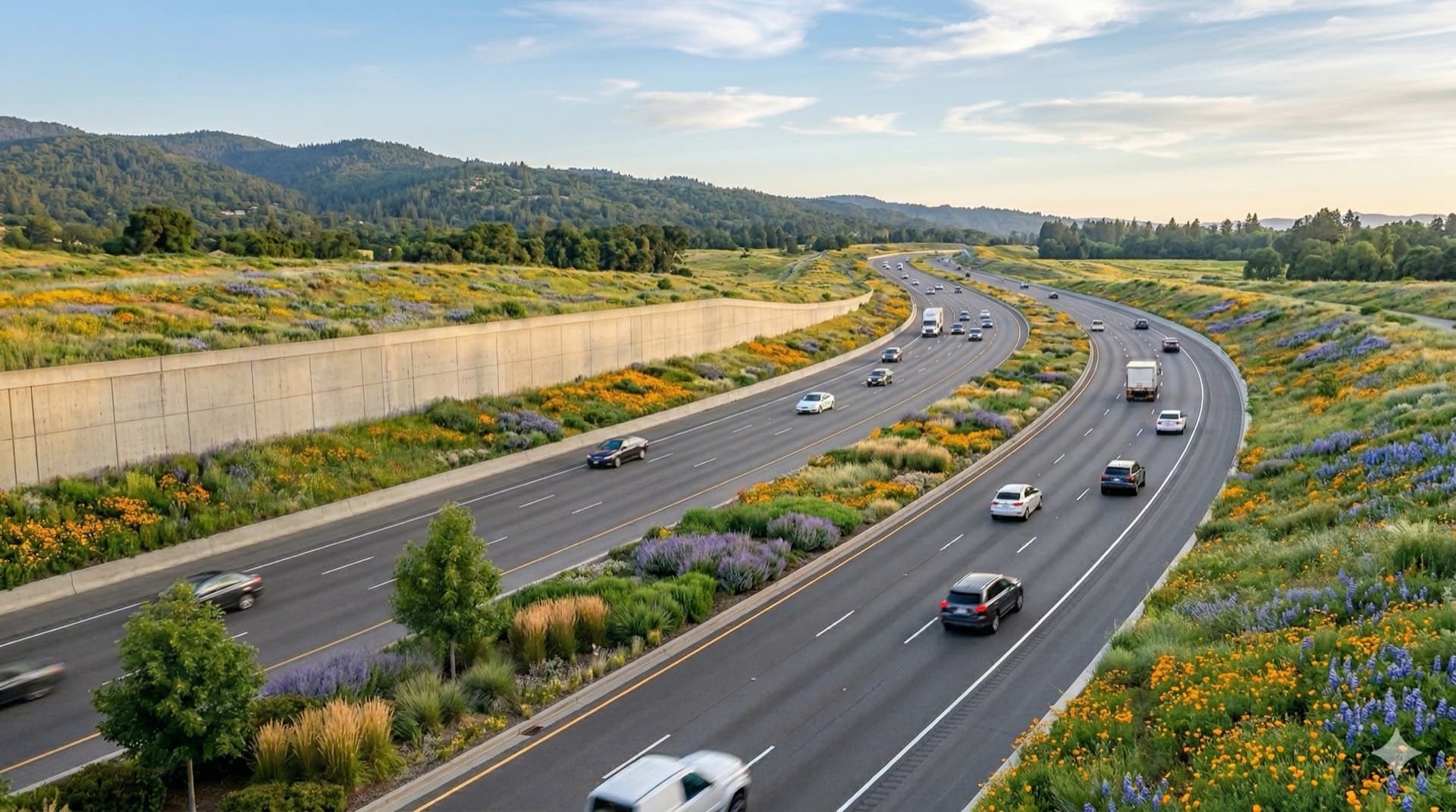
Plantation and landscape execution across India
GNIX plants and maintains expressway corridors, campuses, city parks and green walls — with species chosen for the soil and the water that actually exist on site, and maintenance contracted alongside the build.
What we do
Eleven services, but one discipline: planning the planting around the soil, the water and the maintenance regime that will realistically exist.
Corridor execution
Avenue, median, embankment and interchange planting for expressway and highway packages — designed for survival at handover, not just for the drawing.
Service detailCore service
Full softscape execution for campuses, townships, industrial sites and public realm — from soil and levels through planting, lawns and irrigation to a working maintenance handover.
Service detailSpecialist system
Modular green walls on live infrastructure and building facades — engineered for structural load, irrigation redundancy and the maintenance access that keeps them alive after year one.
Service detailSpecialist operation
Moving mature trees out of the way of construction and keeping them alive — root preparation, lifting, replanting and the year of aftercare that decides the outcome.
Service detailAnnual contract
Annual maintenance contracts that keep planted assets looking deliberate — with a written calendar, defined KPIs and reporting instead of an unscheduled crew.
Service detailSupply and placement
Sourcing, transporting, planting and establishing palms and specimen ornamentals — graded by clear trunk and root ball, not by photograph.
Service detailAll services including consulting, green audit, carbon, waste and water
Reference library
36 species with mature sizes, spacing, water demand, pollution tolerance, planting windows, maintenance cycles and honest notes on where each one fails.
7 species
Royal, foxtail, bottle, areca, date and fan palms used on Indian boulevards, entrances and campuses — with mature sizes, spacing, handling weights and establishment care.
Browse palms9 species
Neem, arjuna, karanj, gulmohar, amaltas, ashoka, peepal and tabebuia — canopy behaviour, root aggression, pollution tolerance and median suitability for Indian roads.
Browse avenue trees6 species
Bougainvillea, oleander, tecoma, ixora, hibiscus and plumeria — bloom calendars, median performance, pruning regimes and honest maintenance load for Indian conditions.
Browse flowering shrubs4 species
Duranta, ficus panda, clumping bamboo and thuja — clipping frequency, screening height, glare-cutting performance and boundary use in Indian landscapes.
Browse hedges and screens5 species
Selection-1 Bermuda, Korean and Mexican grass, vetiver, wedelia and portulaca — water demand, mowing load, slope protection and where each one genuinely belongs.
Browse lawns and groundcovers5 species
Syngonium, money plant, rhoeo, ferns and spider plant — the species that survive on Indian green walls, with light bands, module density and replacement rates.
Browse vertical garden plantsProjects
CompletedExpressway
Avenue and median plantation with maintenance on one of the most heavily used access-controlled corridors in the National Capital Region.
CompletedExpressway
Structured plantation and sustained maintenance on a major NCR bypass corridor built to divert heavy vehicle traffic around Delhi.
CompletedVertical garden
Modular green walls installed and maintained across three flyovers, turning grey infrastructure surfaces into continuous planted facades.
How we work
Species that do not suit the soil. A median too narrow for the trees drawn on it. An irrigation plan based on a borewell that does not exist. A maintenance budget a third of what the design requires. None of these are visible on a drawing, and all of them are visible on site two years later.
Clients


Guides
Cost and procurement · 5 min read
The real cost structure of a corridor plantation package — where the money actually goes, which line items get under-quoted, and how to compare two bids that look identical on rate.
Read the guideCost and procurement · 4 min read
The cost structure of moving a mature tree in India: girth, species, access, crane hours, receiving-site preparation and the twelve months of aftercare that most quotes leave out.
Read the guideCost and procurement · 4 min read
The cost structure of a green wall — build versus five-year maintenance, what drives the number up, why access is the hidden multiplier, and when a green facade is the better buy.
Read the guideWhere we work
Soil, rainfall and winter temperature change what will grow and when it should be planted. These pages cover the conditions, the planting calendar and the species that hold up in each region we work in.
GNIX plans and executes highway and expressway plantation, campus and township landscaping, vertical gardens on buildings and infrastructure, palm and ornamental supply, tree transplantation, and long-term greenery maintenance across India. We also provide green auditing, carbon advisory, waste management and rainwater harvesting support.
Executed and ongoing work covers Delhi, Uttar Pradesh, Haryana, Rajasthan, Punjab, Odisha, Telangana and Andhra Pradesh, with our base in Sector 150, Noida.
Yes. We start with a condition audit of plants, irrigation and soil, because inherited sites usually have irrigation faults and species mismatches that routine maintenance alone cannot correct.
From single campus landscapes and green walls through to multi-package expressway plantation contracts and city-wide beautification programmes for development authorities.
Send the site location, drawings if available, the scope you have in mind and your expected maintenance budget to hello@gnix.in. You will get an assessment of species, timing and what the site can realistically sustain before any commercial discussion.
Send the site details, the drawings if you have them, and the maintenance budget you expect. You will get an honest read on species, timing and what the site can actually sustain.